A Window into Our Wild

I know the realest real is right here in this room.
I’ve always been blessed to have at least one great friend during every period of my life, but I’m not sure I’ve ever laughed as hard or felt as secure as I do here. Magic happens when women gather.
But not just any women—the real happens only when the women are real: with our soft, squishy hearts and razor-sharp teeth; with our frustrated, angry, and lonely tears and our gleeful cackles; with our broken bones and our stretch marks and our wrinkles and our love handles and saddle bags; with our broad shoulders and heroic backs; our honest words and flaws and failings and hopes and dreams.
You have to dump all that out in the center of the circle, take turns stirring up the shit and the trouble and the past—and our shitty troubled pasts. You have to be brave enough to sit there until it swirls down the drain.
THAT is when there is magic, the kind that can’t be explained by science or religion. Women are goddesses, alchemists, witches, angels, and gardeners. Making the magic, tending it, protecting it.
Passing it on.
—Lauren
Hear My Voice: "Women's History Month"
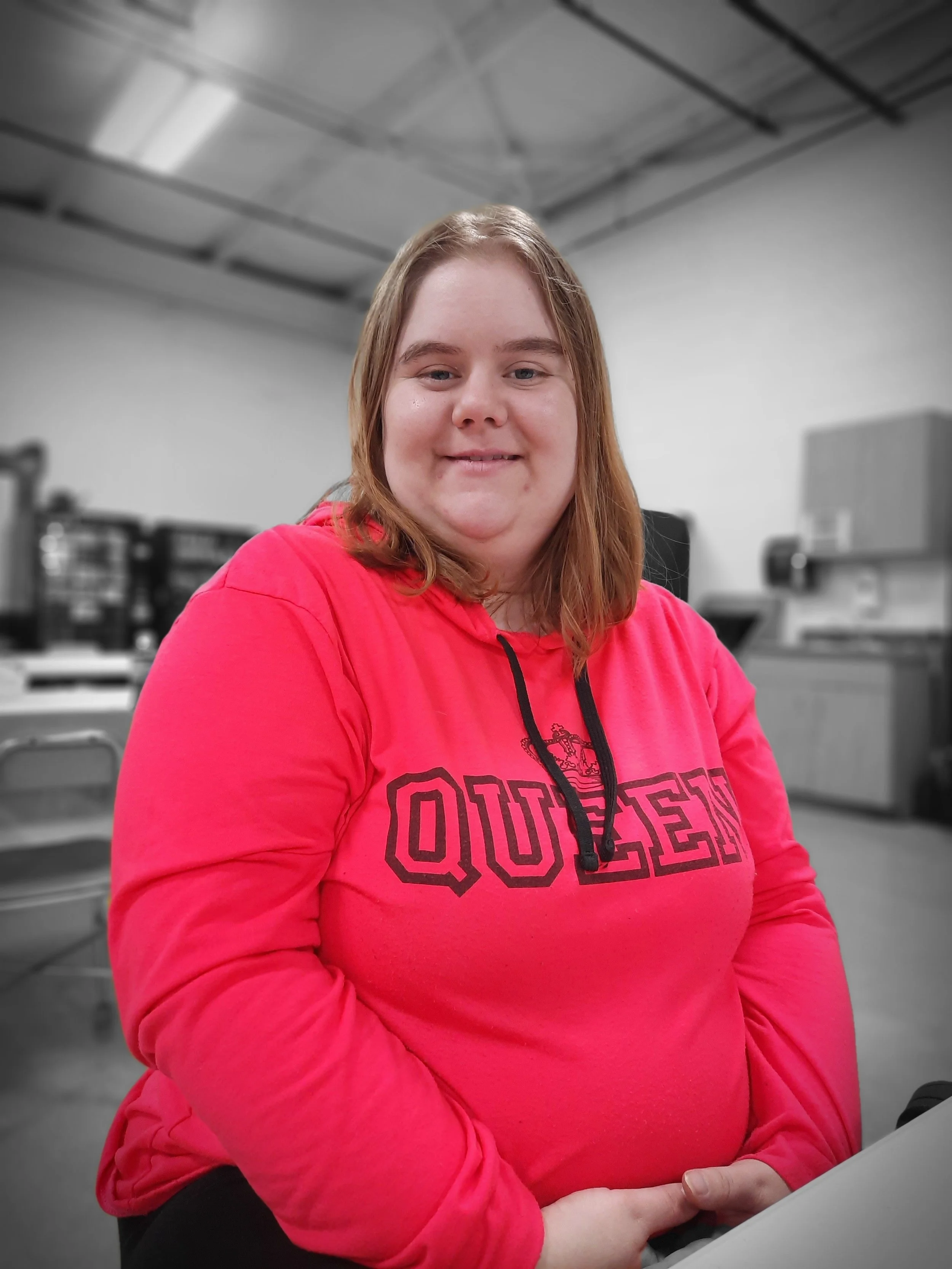
Kerra Blank
This month’s guest blog post was written by Kerra from BAWAC in Northern Kentucky.
Women's history month is the celebration of women who have made great accomplishments. Women such as Susan B. Anthony, Rosa Parks and Harriet Tubman have all made their mark on the world. In the 1950s women were told to be silent and to cook clean and take care of the children. But we are in 2022 now, and women are more progressive than ever. Doctors Lawyers and scientists are just a few examples for instance. Women have always been underestimated but are now stronger than ever before. In the great words of Audrey Hepburn: "Nothing is impossible; the word itself says I'm possible."
And what an iconic woman she was.
We should all follow her example and follow our dreams. We are women hear us roar!
—Kerra
About Kerra
When I was born, I was diagnosed with mosaic down syndrome and at 13, epilepsy. But still I went to public school and graduated from Simon Kenton High in 2008. Even with the disabilities I have and all the challenges it presented, I never let it limit me in any way.
I'm now working at BAWAC and I love it! I love the staff who are kind, the educational activities which keep my mind sharp, and the friendships which I cultivated. I always come in with a smile on my face, a good attitude, and an eagerness to work. I have a strong work ethic and I'm always looking to improve myself, learn new things, and to accept any challenges that head my way.
Though I've never had a college degree, I believe my hard work, dedication, and experiences will help me to achieve great things and hopefully make my dreams come true. Being here at BAWAC made me realize that I can achieve anything I set my mind to. I'm so excited to see what my future has in store for me. My hope is what keeps me going.
About BAWAC, Inc.
BAWAC, Inc., was established to serve people with disabilities or other barriers to employment through rehabilitation and employment opportunities. The vehicle for rehabilitation is the work itself. BAWAC also serves the business and industrial community by providing an appropriately skilled workforce, production and manufacturing services.
If you’d like to write a guest blog post for our Hear My Voice series, about your own personal experience, women’s history, social justice, antiviolence, or another related topic, please reach out to us.
The Strength of the Body–Mind Connection in Empowerment Self-Defense
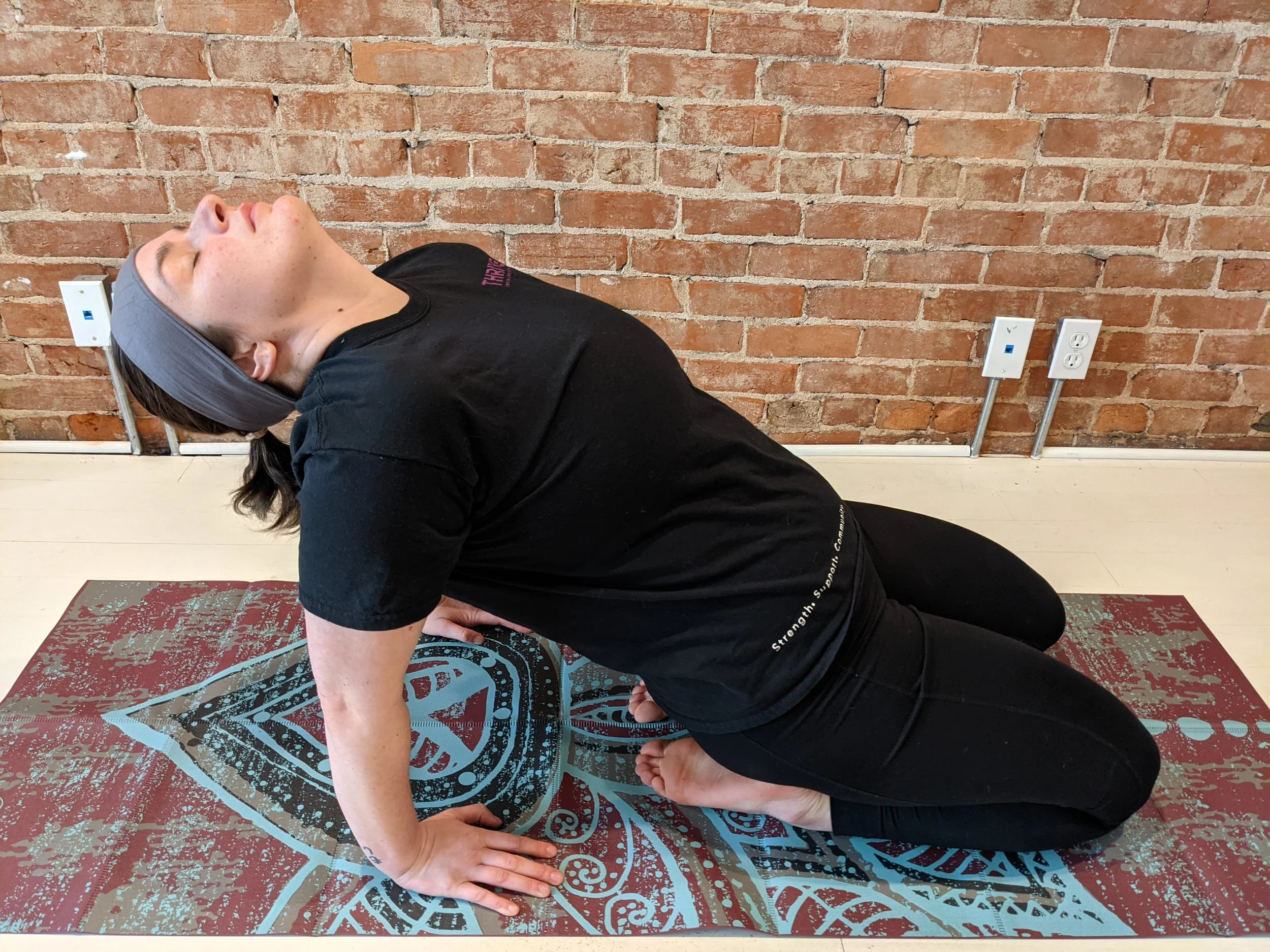

Three quotes hang on a brick wall in our Center, and one of them reads: “The body cannot go where the mind has not gone first.” I’ve spent a lot of time looking at this poster and thinking about what it means and if I still think it’s true. I do. Mostly.
It makes sense that if you can’t imagine or envision a change for yourself, it’s impossible to take the steps to bring that change into being. If we won’t even allow ourselves to dare, to dream, to design, how can we make? I find this idea incredibly powerful; just imagining is a radical act of creation. Imagining a better job, a more fulfilling relationship, a healthier attitude toward yourself—this is the first step to creating that better reality.
But the mind can also get stuck in negative, unhealthy patterns, and for many of us, imagining is immediately followed by messages like Nice thought, but that’s impossible for me. I’m too weak/scared/stupid/fat/awkward/clumsy/ugly/[insert whatever other horrible thing we say to ourselves] for that better life.
The revelation for me has been that, in some contexts, we can un-stick our minds using the opposite strategy: the mind cannot go where the body has not gone first. Oversimplified, this is the wisdom of “Just do it.” Sometimes not overthinking things and simply putting your trust in your body—for example, continuing to show up to a new class even though you’re terrified—can silence the noise in your head that tells you you’ll never be good enough.
Seeing both these phenomena at work in our Empowerment Self-Defense (ESD) classes has given me new reverence for the connection between our minds and our bodies. In fact, I believe that understanding and using this connection for personal growth is one of the things that makes ESD so vital to both violence prevention and trauma recovery.
When the Body Follows the Mind
I started my martial arts training a little over seven years ago because I was tired of being terrified that I couldn’t protect my children in the event of an emergency. I was nauseated before each class, but I knew I had to go because the idea of failing my kids was scarier to me than the training itself. But every moment of those first months, I was the deer facing down the semitruck, because it had been a very long time since I had any faith in my physical ability.
I have always loved music, so I created a playlist that I listened to on the drive to class: all female punk/indie rock bands, sending me messages that embraced and celebrated power: rebellion, independence, ferocity, strength, sexuality. I began treasuring those 25 minutes in which I imagined my voice to be the defiant shrieks of Karen O or Kathleen Hanna or Louise Post. I carried those voices with me onto the mat. And I kept showing up—a little more self-assured each week.
Very early in all our ESD workshops at Thrive, we talk about how attitude is critical to self-defense: you must believe that you are worth fighting for in order to fight—whether that “fight” is setting a boundary with a loved one or sending a swift palm heel strike to an aggressor’s face. Participants’ voices can be soft and tentative the first time we invite them to say, out loud, “I am worth fighting for.” But each time they repeat the affirmation throughout the class, those voices get stronger.
Other affirmations, delivered as a call-and-response, become the refrain to our group activities: I matter. My voice matters. I am important. My body is mine. In this way, our minds command our voices to express self-worth, and as our voices make those sounds, they literally resonate through our chests, throats, and around the room. And as we hear other participants say the words, too, the collective sound is strong and true. If we all matter, then I must matter too. Affirmations are like warming up a car engine: motion comes so much more easily and smoothly when we take the time to do them.
When the Mind Follows the Body
If affirmations warm up the car engine, striking a pad is like slamming your foot down on the gas.
It’s hard to express in words the look on a woman’s face after the first time she hits a pad. The satisfying and resounding pop that comes from the impact sounds powerful and feels powerful. It’s impossible to deny her capability after hearing that sound and feeling the force move through her own body. This is the best kind of “shock and awe”: She didn’t believe she could, but she did it. No one else helped. She did it. And, maybe for the first time in her life, she knows it.
And so the next time she steps up to strike, she does it with a bit more certainty. And before long, she’s smashing that little black vinyl pad like she never had a doubt.
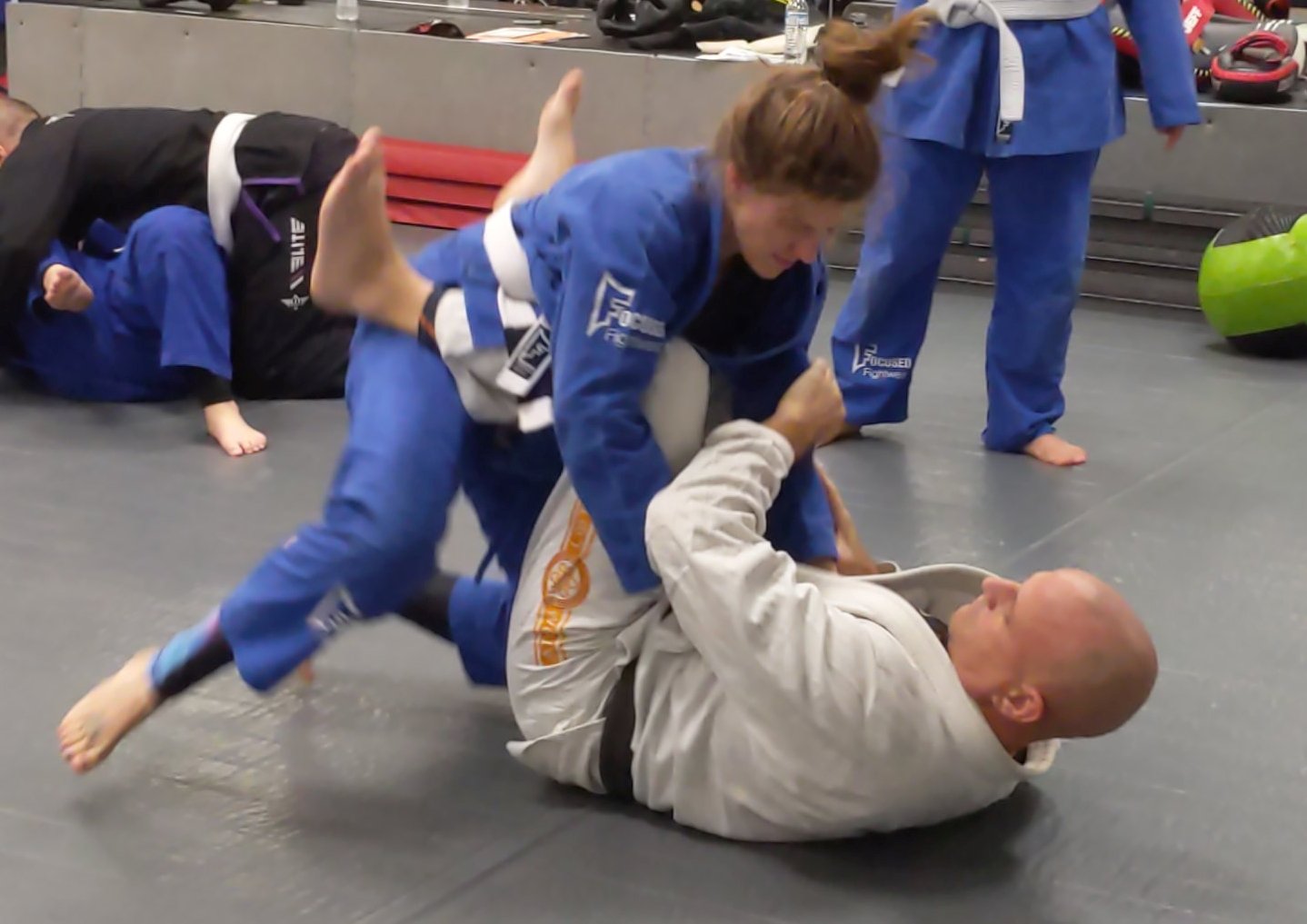
Following your body can be effective in situations where thinking too much leads to fear. I used this technique in my own martial arts training when I started Brazilian jiu-jitsu, a grappling art. More often than not, I am the only woman in the daytime class at my gym, and so in those early months, when my coach yelled, “OK, grab a partner,” my only options were men—unfamiliar, bigger, stronger, more experienced. Yikes.
The trick I used was to just run to the first guy I saw: don’t think, don’t even really look, just go. “Hi, I’m Lauren, will you be my partner?” They always said yes, they were always kind and patient (thanks for the fantastic mat culture, Coach), and even when I spent the whole sparring session with my back against the mat getting the air smashed out of me, when it was over, I was elated. I did it. All by myself. I was brave. Nothing terrible happened. I tried and I learned.
In those moments, stopping to think or to evaluate each possible partner would have led to the paralysis of self-doubt. So I just didn’t give those thoughts space to take hold. My body kept leading me until my mind believed I was safe and accepted.
At this point, I felt like I’d found the secret sauce of empowerment: I trusted my mind to lead me sometimes, and I trusted my body to lead me at other times. Before long, the hard lines between them blurred so much that I finally felt truly present in my training: Mind? Here! Body? Here!
I finally felt safe and whole. And proud of myself.
Using the Mind–Body Connection for Safety and Healing
Safe and whole. That’s the goal we wish for every person who walks onto our mat at Thrive. And we understand that we need to support their entire person if we ever hope to help them achieve that.
Here are several ways Empowerment Self-Defense is different from “traditional” self-defense and works to cultivate and reinforce the mind–body connection:
We spend just as much time addressing cultural, mental, and emotional barriers to safety as we do striking and kicking pads.
We explicitly acknowledge that there are survivors present in every group and affirm the survival strategies they used to bring them to that moment.
We share stories and invite discussion, using the experiences participants relate to build practice scenarios and other connections to the material we’re learning.
Each high-level concept, such as boundary setting, consent, or adrenaline management, is paired with an activity so that action follows idea (or vice versa).
When practicing physical techniques, we invite participants to start slowly—going through the motions at a pace that feels comfortable and increasing power and speed only as they feel ready.
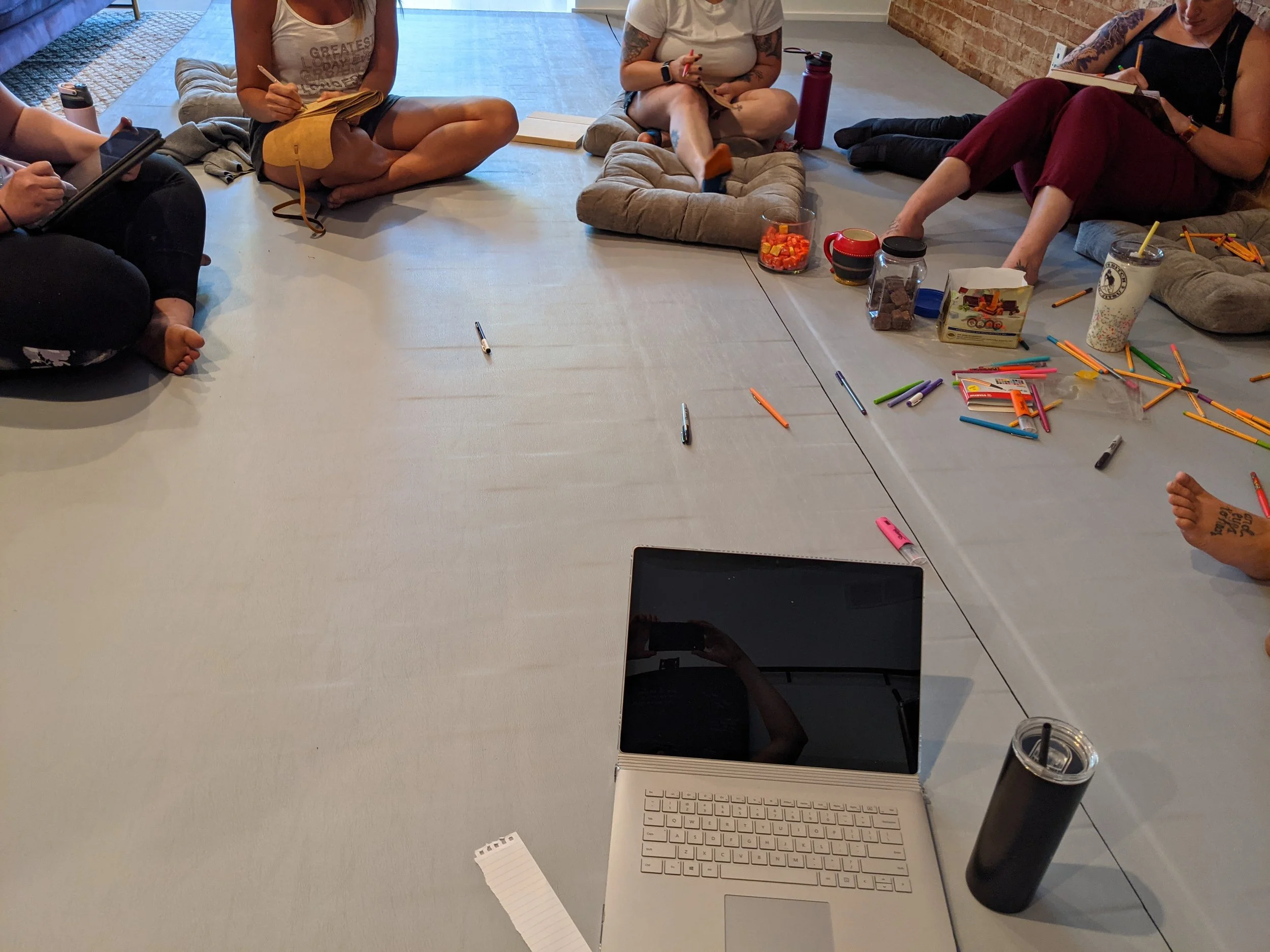
Physical skills lessons are delivered using all four learning styles: visual (watching the demonstration), auditory (listening to us talk through the moves), kinesthetic (practicing the skills themselves), and written (making notes in a notebook).
It’s our intention that these practices allow participants to connect with the material and (re)connect with their own mental and physical selves in whatever way suits them best. Our work is all about providing tools—not telling people what they should do or feel or think. Prioritizing personal agency in a supportive community, ESD bolsters safety and wholeness.
Looking for Opportunities to Practice Connection?
If you’re in the Greater Cincinnati Area, join us for a weekly class focused on the mind-body connection.
Body First: Try Punch It Out! or Body Love
Mind First: Try Writing Reconnection or Body Love
2021 Thrive Drive: Turning Awareness into Action for the ION Center
Friends,
It’s been a year of ups and downs as we all fight to recover from the pandemic, but we still have so much to be thankful for. We started the Thrive Drive last year as a way to shift from the DV/IPV awareness activities of October into action—something concrete and meaningful we can do right now to make a difference for survivors.
As you’re probably aware, the lockdowns of 2020 were dangerous—and even deadly—for many whose homes were not a safe place. Instead of just hanging our heads in sadness, let’s support and celebrate the accomplishment of those who were able to break free from the cycle of violence and run toward help.
This year, we’re supporting Covington’s ION Center for Violence Prevention. Founded in 1976, the ION Center (known formerly as the Rape Crisis Center of Northern Kentucky and then the Women’s Crisis Center) provides services for survivors of gender- and power-based personal violence. The region they serve includes Northern Kentucky, Buffalo Trace, and Greater Cincinnati.
So what can you do to help? We’ll be collecting the following everyday supplies and holiday items between now and Monday, December 10. Any items you donate must be new and in the original package. We cannot accept used products. There’s no need to wrap the gifts; the ION Center staff will match gifts with kids and wrap them for us.
Special Holiday Requested Items
Hair dryers (FULFILLED! :-) )
Curling irons
Straightening irons
Craft kits
Art supplies
Disney Frozen toys
Paw Patrol toys
Remote control cars
General Shelter Items
Twin sheets and pillow cases
Twin blankets
Pillows
Bath towels, hand towels, and washcloths
Paper products (tissues, toilet paper, paper towels)
Umbrellas
Craft items
Powder laundry detergent
Hair care (brushes, combs, hair ties, hair spray, etc.)
Socks and underwear (all sizes, all ages, all genders)
Bras/sports bras
Baby wipes
Diapers (all sizes)
Feminine hygiene products
Non-perishable food items
Individually wrapped snacks
Juice boxes
Toiletries (shampoo, conditioner, toothpaste, deodorant, body wash, lotion, etc.)
Liquid hand soap
Household cleaning supplies (bleach, disinfectant spray, bathroom cleaner, etc.)
Gift cards (Kroger, Walmart, Amazon, Target, etc.)
Gas cards
As a thank you for helping us to give the ION Center residents a happier holiday, everyone who donates will be entered into a raffle for a Thrive gift basket (including merch and a 5-class pass!) and a Lumin Massage gift certificate.
You can drop your donations off at Thrive, contact us for a porch pickup (Cinci/NKY only), or Venmo us cash (with a note that it’s for the drive) and we’ll do the shopping for you.
Thank you so much!
—Lindsey & Lauren
Letting the Beast Out
For years I was quiet. I behaved. I bit my tongue when all I wanted to do was scream. I was always a fighter, but I told that side to sit down and shut up for her own safety. I needed a release for this built-up rage. It began to push hard at the seams I’d carefully sewn.
And so I created “Punch It Out”: an hour each week when you can throw a tantrum, scream, fight, hit, yell, punch, kick. There are no rules. There is no judgment. This new therapeutic movement class is a safe place for rage—a feeling that so many of us have been told is not appropriate or, worse, a sign we’re crazy.
But acknowledging your rage and giving it a creative outlet is healthy. So we invite you to come listen to loud music, hit pads, and release all that pent-up stress and anger.
Although “Punch It Out” is our least-structured class, we’ll coach you to hit safely and provide padded equipment. Class is on Tuesdays from 6 to 7 pm. (You must sign a waiver to participate. Rage at your own risk.)
—Lindsey
Facing Fear: A Survivor's Breakthrough Poem
CONTENT WARNING: Physical abuse
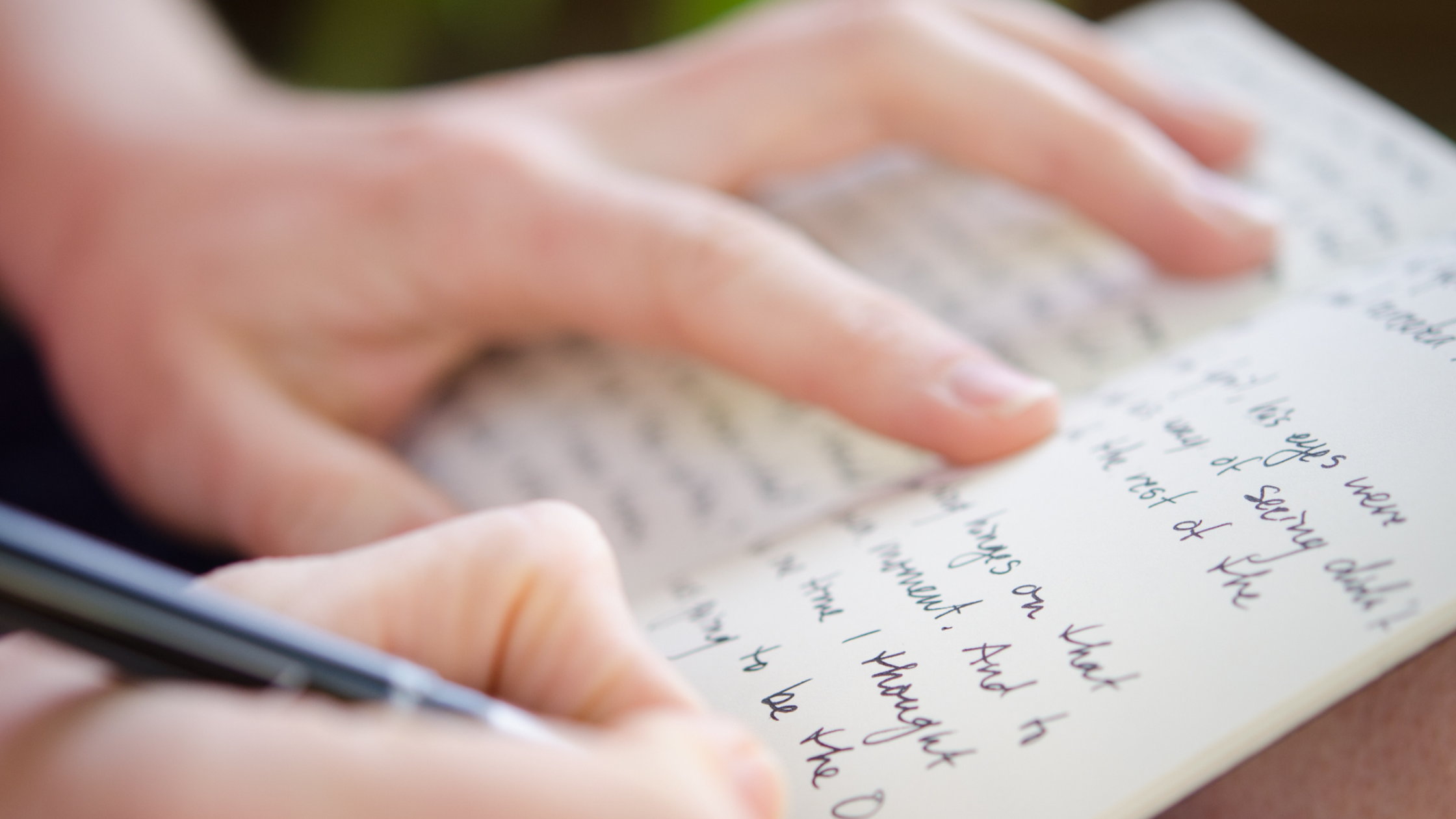
This poem was written by Thrive co-founder Lindsey Ross during our weekly Writing Reconnection group.
I pride myself on not being scared of anything.
He would kneel on me until I could hear my collar bones and ribs snap under him. Sinking deeper. Forcing my body hard into the ground beneath. My body I no longer owned. The body I stopped owning years ago.
He would hold my head still while he would yell into my “Stupid Broken Ears.”
I pride myself on not being scared of anything.
He would leave me in stores when I took too long looking at tangible things that brought me little sparks of joy. He would drive away no matter where we were.
I got great at walking.
I pride myself on not being scared of anything.
He would drag me across our spotless, perfect home. Not home. Cage of nightmares. By my perfect, long dark hair.
He would put bags over my head just to see me struggle. Sometimes they would smell like the stores he’d leave me at that bring me little sparks of joy.
I pride myself on not being scared of anything.
I pride myself on not being scared of anything.
I pride myself on not being scared of anything.
I’m not scared of anything.
I’m not scared.
I won’t be scared of anything.
—Lindsey
5 Self-Defense Lessons Every Child Should Know (and How We Teach Them)
When we began our journey as Empowerment Self-Defense instructors, we envisioned classes of adult women, sharing their life experiences and hitting pads with all their might. We threw ourselves into research on domestic violence, campus assaults, and trauma psychology—doing our best to ready ourselves for whatever experiences the women in our workshops might have had. But just a few classes into teaching, we got a call we didn’t expect: Can Thrive go into an elementary school and teach self-defense to children whose neighborhood has seen a spike in attempted abductions?
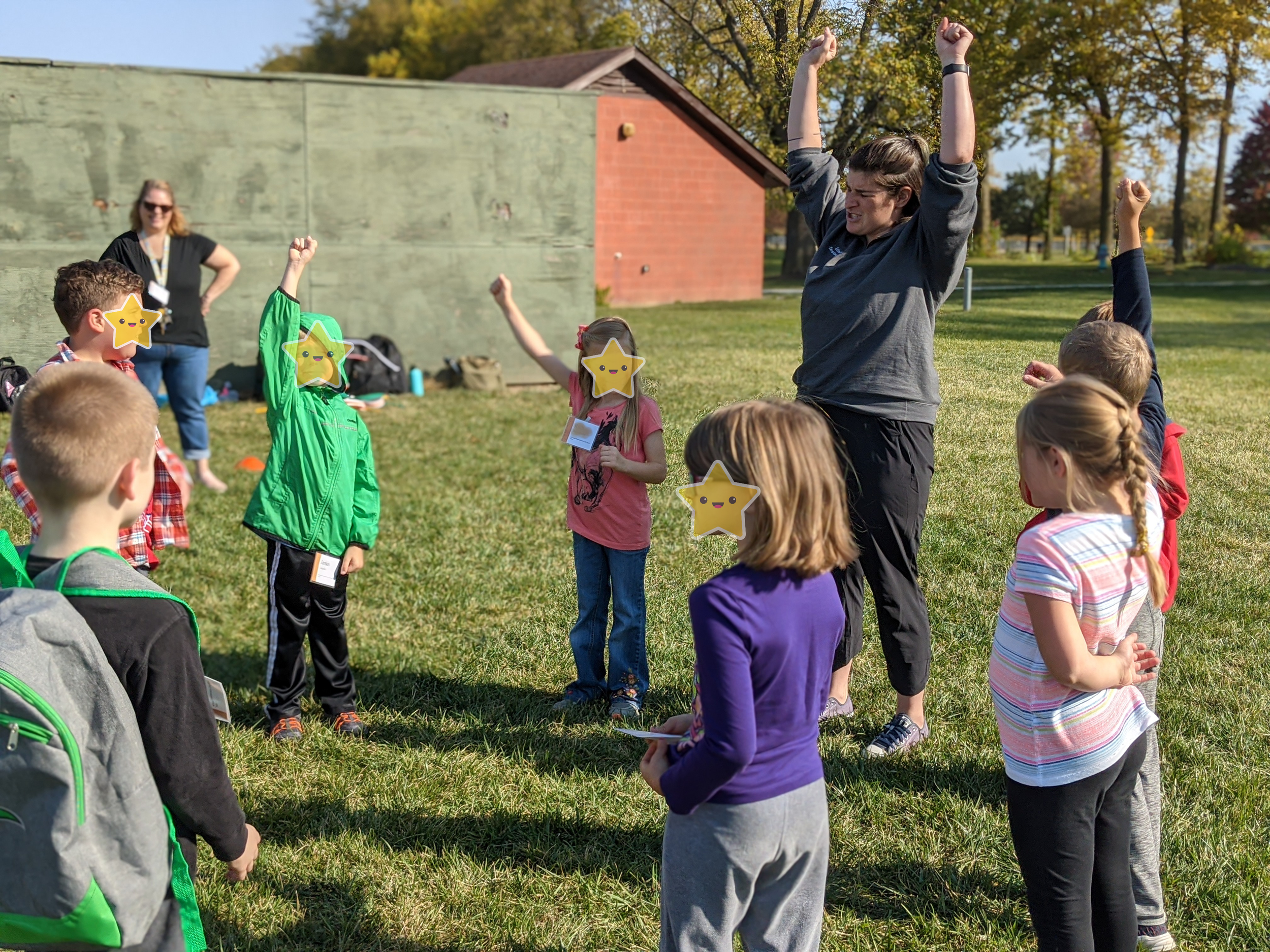
Yes, we’d love to, we answered. These kids needed help—and fast—so we dove back into our research and curriculum to adapt what we taught for younger audiences. Drawing from Lindsey’s years of experience as director of a summer camp and weekly programming for at-risk kids and my experience as a mom, we created games and activities that would get little bodies moving and having fun, and learning while doing it.
When we go into a school or community program, these are the key concepts we introduce and then continually reinforce through different games and activities.
1. You matter and your voice matters. Just as with adult ESD, attitude—knowing you’re worth fighting for—is a foundational idea that cannot be overlooked. Many of our activities focus on getting kids to talk about what makes them strong, what they like about themselves, and why they’re important. From signature dance moves to “power shouts” we celebrate kids’ individuality and reinforce their self-worth.
2. Listen to your intuition. While most elementary schoolers have never heard the term intuition, they know what an uh-oh feeling is like—it’s that house on the block that you don’t want to trick or treat at, or the one with the big dog that you run past at top speed. We open discussions about what that feeling is like, where they feel it in their bodies, and what they can do when they feel it. We stress that that feeling is always right—it’s there to protect them—and when they feel it, they should talk about it with someone they trust.
3. Your body belongs to you. This is the foundation for kids developing body autonomy and understanding consent. It’s OK to not want to give or receive hugs all the time, for example, and we practice polite but firm ways to tell well-meaning (or not) adults that they don’t want touch. We use a game akin to “Rock, Paper, Scissors” called “Wave, Handshake, Hug” to begin to understand consent. Borrowing language from our friends at KidPower International, we also distinguish that some touch that is not a choice—such as doctor visits or caregivers helping with bathing or toileting—but those instances should then not be a secret. If touch ever doesn’t feel right, a child should tell another adult.
4. Pick your chief grownup(s) and don’t keep secrets from them. We’ve designed a fun art activity called the “Donut of Trust” to help kids identify who their safe or “chief” grownup is—this is the person or few select people that love and take care of them and that they feel they can go to if they’re hurt or afraid. If they don’t listen, keep telling until you find a grownup who listens.
5. There are no rules in physical self-defense. If a child is in a situation where they feel afraid for their safety or life, we let them know that they are allowed to do anything they need to get away to safety. Scratching, biting, hair pulling, screaming in public—remember all those things you got in trouble for doing to your siblings or cousins when you were a kid? Now is the time that it’s OK to do them.
These lessons are basic but so critical for kids’ independence. There’s absolutely no reason to scare children into being safe (and I’m pretty sure I still have nightmares from my 1980s ChildWatch school visit); rather, focusing on their self-esteem and the power they have to notice situations and communicate about them is a far more empowering approach. They still have fun kicking pads, of course. But if, by the end of the session, we’ve gotten them to talk to their chief grownup, pay attention to the sensations in their bodies, or speak up for their feelings, we’ve made a positive impact.
—Lauren
Letter to a Survivor
Dear Survivor,
At the beginning of each of our classes, we address the circle, looking for you so we can tell you: Whatever you have been through, whatever you had to do to get here today, please know that you did your very best.
We can make eye contact with you and try to address that message to your very soul. We know right now you probably don’t believe it. Though your face is expressionless, you are probably thinking, You don’t know what I did. You don’t know what I let happen. You don’t know my story.
And you’re right—we don’t know those things unless you share them with us. And even then, your exact shoes are ones we’ll never walk in.
But there are a few things we do know: You are here today, which means you are smart and resilient and have at least a tiny spark of self-love—enough to want to protect yourself, enough to want to confront or cope with what’s happened, enough to want to heal yourself.
Survival is our most fundamental instinct. Like breathing or eating, when this work needs done, our bodies take over regardless of what our minds may want. Maybe you fought back with your words or body but couldn’t stop the assault. Maybe you froze or disconnected your brain and body to get through those terrible moments. Maybe you lied to yourself and others, or stole, betrayed, or burned bridges with loved ones to hide from your abuser or to keep their wrath at bay. Maybe you endured some type of violence to try to prevent another, worse type. Maybe your abuser forced you to say you wanted the abuse or deserved the abuse; maybe they forced you to tell your friends and family that you didn’t want them in your life anymore. Any of these things—or others—may fill you with guilt, shame, hurt, or rage now. But in the moment of those actions, your survival instinct was in charge. Just keep me alive. Nothing else matters if I don’t survive this day.
And although assault may make you feel isolated in a hundred different ways, we can promise you that you are not alone. We cannot return you to a time when this horrible thing didn’t happen to you and we cannot promise you that one day you’ll feel no pain, but we can offer you the space and support to name those things you thought you’d never be able to say out loud and begin to loosen their hold on your mind and heart. We can teach you things that will remind you how strong and capable you are. We can welcome you into our community if you feel ready for that.
We may not understand, but we’ll never stop listening to you, because you matter.
—Lauren & Lindsey
My Body, My Self
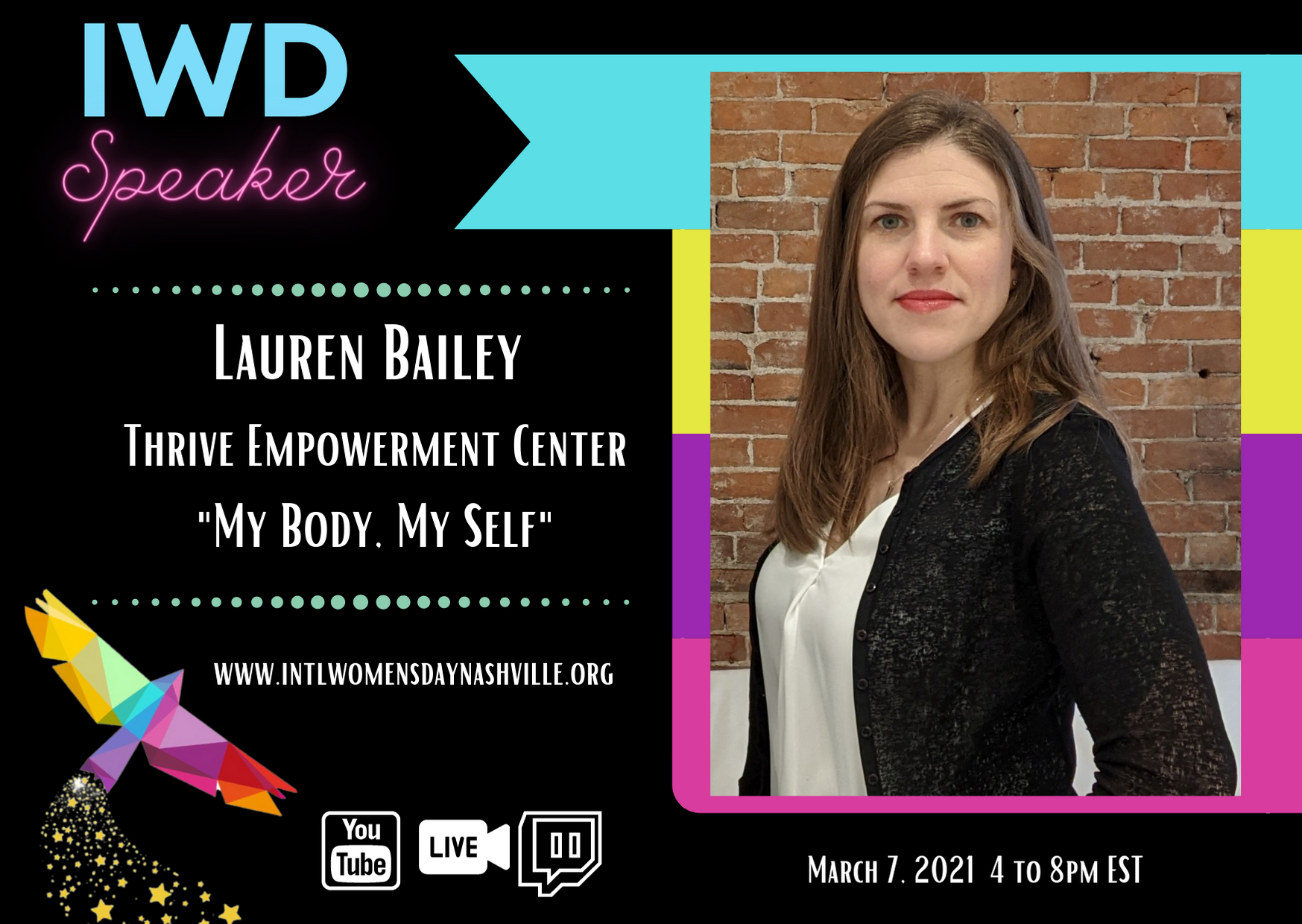
The following is the text of Lauren’s 2021 International Women’s Day talk.
Trigger warning: Depiction of eating disorder
So many of my earliest memories of my body are scenes of humiliation.
If you were a child of the 1970s or 80s, you probably remember the Presidential Fitness Test program. For those of you who didn’t suffer through this, it was essentially military training exercises for elementary schoolers.
I’m about 7 or 8 years old, lining up in front of the monkey bars—my teacher, with clipboard and stopwatch; my schoolmates, a silent jury. The crushing dread as my turn inched closer. In my memory, I am the only kid in my class who can’t lift my body weight so that my chin is the required number of inches above the bar. I don’t know if that’s true; it doesn’t really matter. I got the message: my body is heavy and weak. A source of embarrassment.
I carried that shame over to my playdates, where I began to notice my friends’ taller, leaner, willowy bodies. I measured them with my eyes and then scrutinized myself: broad shoulders, round hips, round butt, soft middle.
Some evenings, when I snuggled next to my mom on the couch, we would pore over the women’s catalogs from our mailbox, marveling at the perfection of these angelic bodies and laughing while we tore our own bodies apart. These magazine bodies were the kinds that clothing was made for. I recognized that the bodies my friends matched the bodies of these grown women. The message was reinforced: My body is heavy, weak, not beautiful.
Around the same time, my father moved out for good. He still dropped by once or twice a week to visit, but each time he left, my mom would retreat to her room to cry while my little brothers and me sat in stunned silence. I’m not sure if that’s when my mom stopped eating and started exercising at a horrific place called Slender Lady, but that’s when I started taking notice. Here’s what I learned: When people stop loving you, it’s probably because your body isn’t good enough. Also, grown women only need to eat once a day, and it’s at dinnertime. Also, when your family is falling apart, you CAN’T TELL ANYONE.
By the time my preteen years arrived, my hips and breasts were even rounder, and the emotional yo-yo my parents had me tethered to had made me furious. “Throw him out and change the locks,” I raged. My rage went nowhere, and worse, it seemed to hurt my mother and brothers more because it threatened our protective silence. I got the message: Shut up. Stop making trouble.
The rage went nowhere. Except it curled back on itself like a tidal wave and swept me under. It was clear to me that I could depend on no one but myself, and if that was true, then I had to be the BEST self. Thin, tough, brilliant, untouchable. Perfect. The only obstacle in my path was that the body I lived in was a failure. I looked in the mirror and my mind said, Nemesis. I vowed to bend that weak, fat, furious crybaby to my will.
I was already embarrassed to be seen eating; I hid my sandwich and carrot sticks in my brown paper bag and retrieved them a nibble at a time, so my friends couldn’t judge what I didn’t deserve to eat.
To solve that problem, I just stopped eating. I was in charge of looking after my brothers while my mom worked, and grown women were strong enough that they didn’t need food anyway. No breakfast. No lunch. Sometimes just bread for dinner since I was tired after basketball practice and I had homework to do.
I pushed myself hard in the classroom and on the court. I excelled in academics but was only a member of the practice squad for our team. I didn’t have the energy to run as fast as the starters; I couldn’t concentrate well enough to pick up new plays quickly. “You’re the dumbest smart kid I know,” my coach yelled.
I was never going to be MVP, but those hours of wind sprints and scrimmaging on an empty stomach garnered the only award I ever really wanted: I was thinner. I started getting compliments. I had a steady boyfriend who played varsity. I was graduating top of my class. It looked like I was winning.
So I kept going through college and grad school. I exercised every day, sometimes for hours, and allowed myself to eat only enough to fill the center of a dessert plate. My willpower was iron. I was a 6. A 4. A 2. A Zero.
I lived on coffee, cigarettes, beer, and granola bars, and I had blinding headaches nearly every day. I was fortunate enough to have a grad school boyfriend who gently nudged me to see a therapist on campus. With her help, and the help of two more amazing women therapists after I graduated, I started to peel away the years like onion skin. The tears that came washed away all those secrets and all that rage, but without taking me along with them.
I didn’t realize that my second therapist specialized in eating disorders. It wasn’t until I saw my story reflected in her face that I even realized that’s what I had. What I’d been doing wasn’t the victory of an iron will; it had a name. And it was a pretty common response to a chaotic childhood. She gave me books to read and homework, something I’d always been great at: a single piece of paper torn from a yellow legal pad, with what was a normal, healthy amount of food to eat each day.
Now I had an academic solution to the problem of my body, and I was excited. My mind had gotten my body into this mess so I was convinced it could get me out.
The dissociation of the mind and body is a well-known effect of trauma. If you’ve studied psychology or the aftermath of violence at all, you’ve probably heard stories of rape survivors or combat veterans who were able to detach and allow their consciousness to float above the horrific scene their body was living. It’s a powerful evolutionary means of self-protection. The correlation between issues of personal control (such as feelings of helplessness and futility) and disordered eating is also well documented. I had separated my mind and my body and pitted them against each other. The only way back to health was wholeness. But I didn’t fully understand that yet.
Reckoning came in the form of two beautiful, healthy children. Balanced nutrition became my focus. This wasn’t about me; it was about making sure my kids were growing and thriving. Tucked behind my overwhelming love for them was a whisper of wonder, “Body, after everything I put you through, you could still do this for me? You could still make these gorgeous tiny humans?”
For the first time in my life, I recognized the strength and goodness in my body. I felt gratitude and appreciation.
I no longer hated my body, but I was still pretty far from trusting it. A new anxiety settled in: What if my little ones needed me to protect them and I couldn’t? What if the house caught on fire or we had a home invader, and I just froze?
My husband’s job took him out of town 5 days out of every week, and I spent months of sleepless nights worrying about failing my kids. One such night, I’d decided I’d had enough. I sat up in bed and dropped an F Bomb out loud into the darkness. I was going to find a women’s self-defense class, because training would give me an action plan and increase my chances of pushing through the freeze.
I had never studied martial arts or thrown a strike in my life, but on a frigid February night, I drove to a tiny strip-mall dojo. There, I got my first lessons in actual assault statistics, situational awareness, and risk assessment. Then I learned how to break a tight grip on my wrist with just a simple circular motion—the rest was a blur of excitement. I could do this! That night lit a fire in me I’d forgotten I’d ever had.
I signed up for a weekly class, and each session brought a physical challenge I’d never before faced. But I kept returning, and as the months passed, I noticed that my mental tapes had changed. I approached each new technique not with assumptions of failure but by saying, “I’ve never done this, but I’ll try.” That gave me permission not to be perfect. It didn’t matter if I failed, as long as I got back up.
The warrior spirit that martial arts awakened in me made positive impacts on other parts of my health. I was back in the gym, but this time with a focus on strength and endurance so I could spar with my male classmates. I ate with an eye on protein, vitamins, and minerals and never stepped on a scale or counted calories once. And, surprise, surprise, my weight finally stabilized and I actually liked what I saw in the mirror. Now, when a self-critical thought tries to creep in, I can easily push it away, pull on my rashguard and gi, and wink at the woman in the mirror.
I’m 42 years old now. I have stretch marks, forehead wrinkles, temperamental knees, and ankles that sometimes lock up just because. But I have escaped from the chokeholds of men twice my size, I’ve survived more than one shark-tank sparring round, and most importantly, I have found a place where my mind and body work together, where I can be my whole, true self.
I know striking and grappling aren’t for everyone, so I urge you to find the place where you can be whole. Some of my sisters have found that place on a dance floor, or a yoga mat, or a hiking trail, or clinging by their fingertips to the side of a boulder. Wherever it might be for you, find the movements of your body that set your mind at ease, the place where your self-criticisms can be replaced with appreciation. The place where your body and your self are one.
—Lauren
Dancing Every Day
I don’t do New Year’s resolutions. It’s not my style. I believe you’re just setting yourself up for failure and self-hatred. I don’t want to give things up, or tell myself no. I felt very strongly about this until this year. Twenty twenty was a garbage year for everyone, but I’m sure my negative perspective didn’t help. This year has to be different. It just has to be, right?
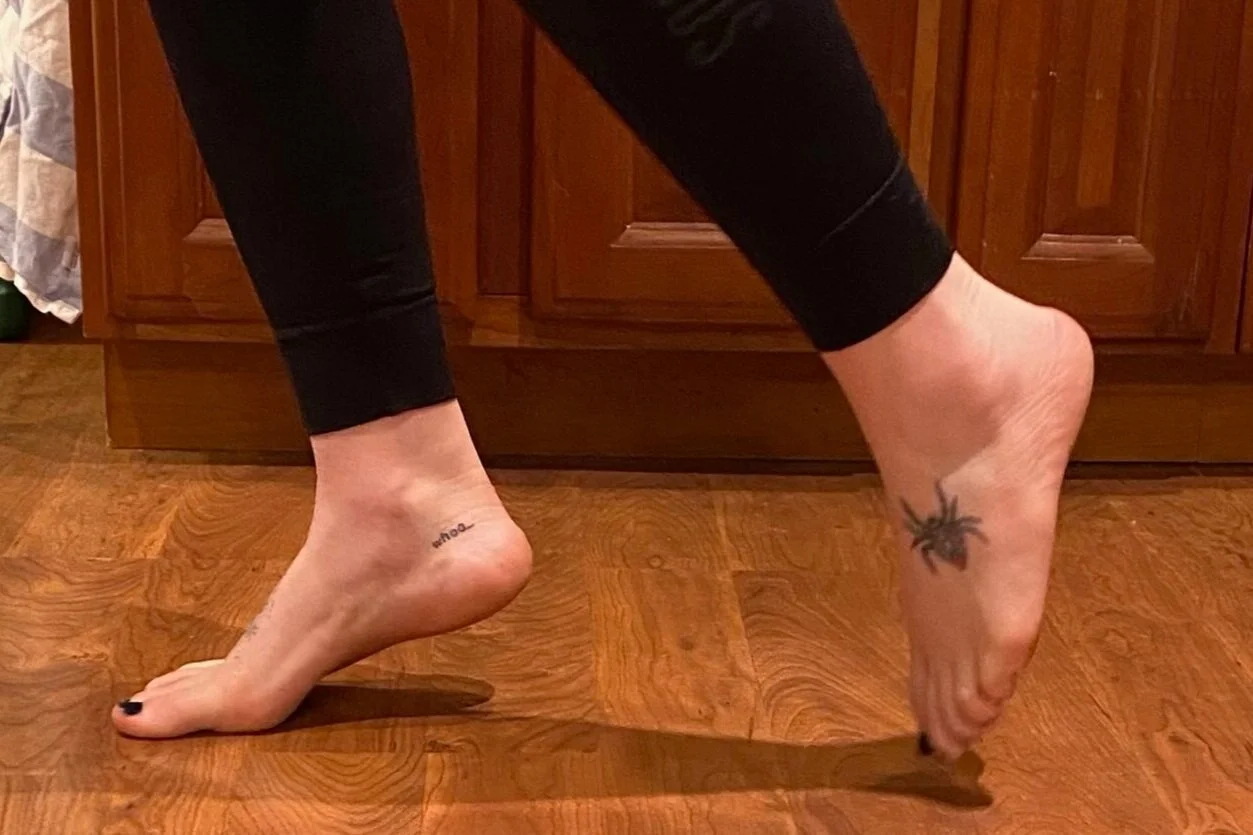
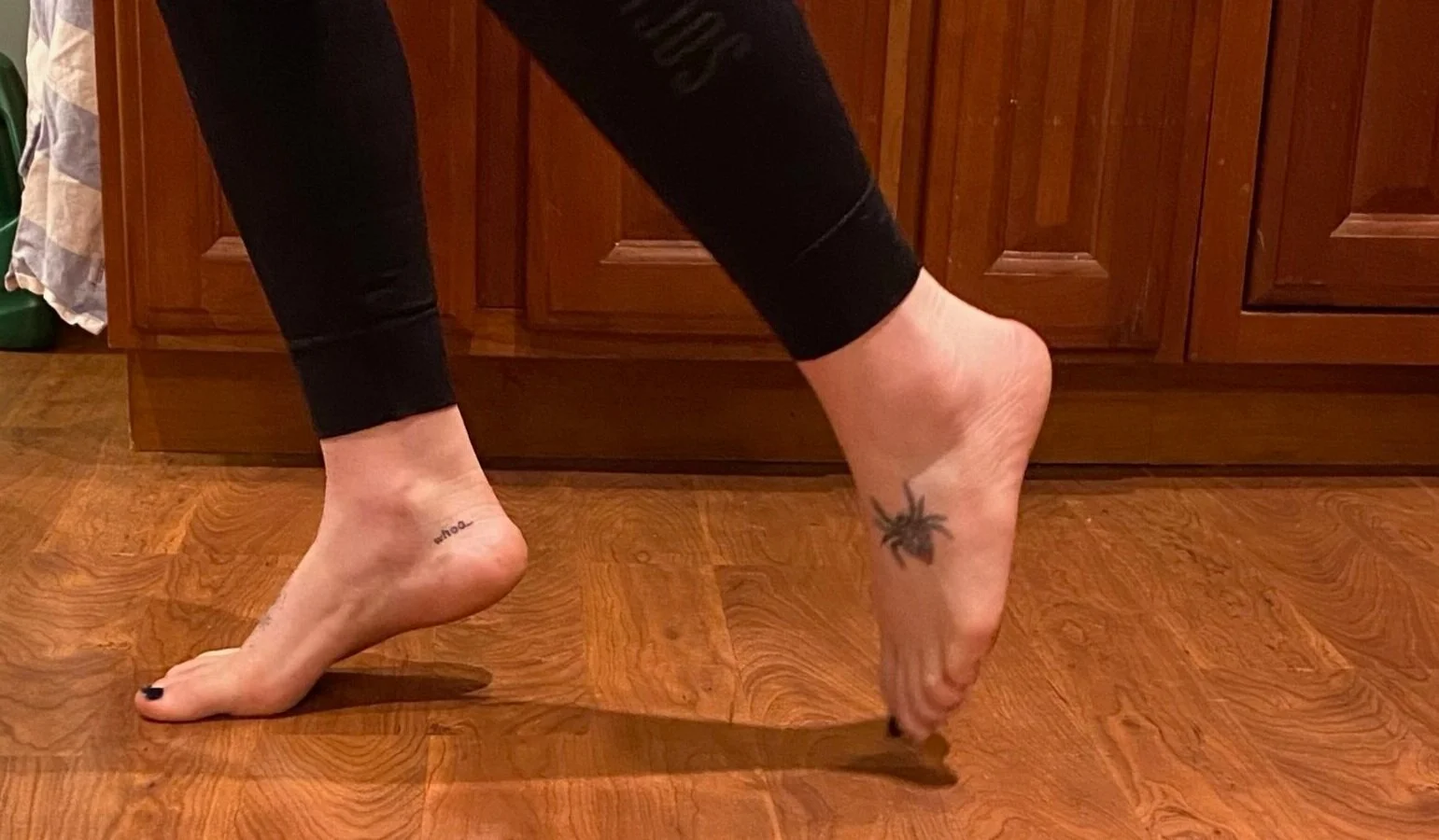
Recently a friend start doing Instagram Lives where she dances for 30 minutes every morning. She challenged all of us to do the same. Now, I am not flowy like she is. I don’t send waves of empowerment through the moves of my body like she does. Thirty minutes is an entire TV show, so that is a no go. But I accepted the challenge. Not 30 minutes, but I was going to start my morning dancing. Every morning. I also challenged myself to dance when I’m frustrated or overly emotionally stimulated.
I punch and kick things; I don’t dance. I’m not a graceful person. I’m not a gentle person. Dancing’s not my thing.
But I’ve done it. For 17 days now I have danced. I dance fast, or I dance slow. I feel stupid a lot, until it goes away and I just find myself in the dance. I can only compare it to runner’s high or great sex. I dance. And I love it. I dance in my kitchen; I dance in my office. I turn the world off and dance. I have learned dancing is contagious. My very-grumpy-hates-mornings husband has now joined me dancing in the mornings. It’s incredible. This little challenge has quickly became solid important memories I get to cherish.
So this is my challenge to you. Dance. Let your perspective change for just a moment. Live in that moment and cherish the simplicity of moving your body in the world.
—Lindsey
We Wish You an Empowered Holiday Season
A big part of what makes the holidays wonderful is the focus on togetherness, giving, and a spirit of cheer. (Also, cookies.) And while we value all these things, we have to stress an important distinction: Doing for others does not mean forsaking your own emotional or physical safety, well-being, or personal boundaries.
It’s happened to all of us at one time or another. We’ve suffered through gatherings that left us feeling like we’ve just done battle. We’ve endured unwanted affection, probing questions, and snide comments for the sake of keeping peace or feigning cheer.
Not only do we come away from these encounters feeling bad but forcing ourselves into these situations isn’t healthy—it increases our stress, kills our self-esteem, and reinforces to the offenders that they can treat us any way they’d like, no matter how disrespectful or demeaning. It’s important to give ourselves permission to say what we need and what we don’t want, even—and perhaps especially—during the holidays. And if someone in our lives doesn’t respect our boundaries and gets angry at us for maintaining them, that’s their issue, not ours.
We put together this list of positive reminders to fortify you during the coming weeks. Print it out and hang it somewhere in your space if it helps. Repeat these things to yourself each day. And please know that whatever the holidays hold, we’re in your corner. (Reach out to us or to someone else you trust if you need to talk. We know this time of year can be tough.)
DURING THE HOLIDAYS, YOU HAVE THE RIGHT TO
Kindly say no to invitations. Saying no doesn’t mean you don’t love the person or appreciate the invitation, and you can say as much. But you don’t have to go.
Set firm boundaries about how long you will stay at gatherings. Popping in for a half hour or hour is fine if that’s what you want; just because you visit doesn’t mean you are committing to an eight-hour marathon.
Refuse to answer inappropriate questions. Here’s a firm but respectful script you can use if you’d like: “Wow, [Person]. That question feels really personal/disrespectful/mean-spirited, and I don’t appreciate it. Please don’t ask me again.”
Leave when you want to. As soon as you want to. Without an excuse.
Create your own traditions by yourself or with people you love. Sometimes family is the people whom you choose to be with.
Choose to do the things that bring YOU happiness. This time of year is also about peace and joy—that means for you too.
Ask your inner child what he/she/they want this year and then do it. If your holiday trauma has deep roots, give Little You the holiday they have always deserved.
THE CHILDREN IN YOUR LIFE HAVE A RIGHT TO
Depend on you to protect their boundaries. They’re pretty much at the mercy of the adults around them, so please, have mercy on their little bodies and emotions. The example you set for them now will carry through their lives. Sacrificing their feelings for the sake of others’ communicates that their voices don’t matter.
Refuse to sit on a stranger’s lap to get a picture they don’t care about for the sake of “memories.” Mall santas have kind of always been creepy. Is a kid frightened and in tears really the moment you want to preserve?
Decide they don’t want to hug or kiss family or friends they hardly see just because it will appear “rude” if they don’t. Their little bodies are sacred and their feelings matter. When you notice a child resisting affection, you can simply say something to the adult like, “[Name] doesn’t feel like a hug right now.”
Skip some of the many gatherings because their sleep or feeding schedule is important. They’re also allowed to opt out because they’re overstimulated. As a parent or caregiver, it’s your responsibility to recognize this and protect them. There will be more holidays next year.
This year has been one where we’ve had to make sacrifices and limit our lives and movements for the sake of safety. As an antidote to that, let’s “live large” this holiday season—and every season after this—to reaffirm that each of us is worthy of taking up space, having a voice, and enjoying an empowered holiday.
You matter. Your voice matters. You’re worth fighting for.
—Lauren & Lindsey
Photo by Helena Lopes from Pexels
The Season of Gratitude, Love, and Giving: Supporting YWCA DV Services
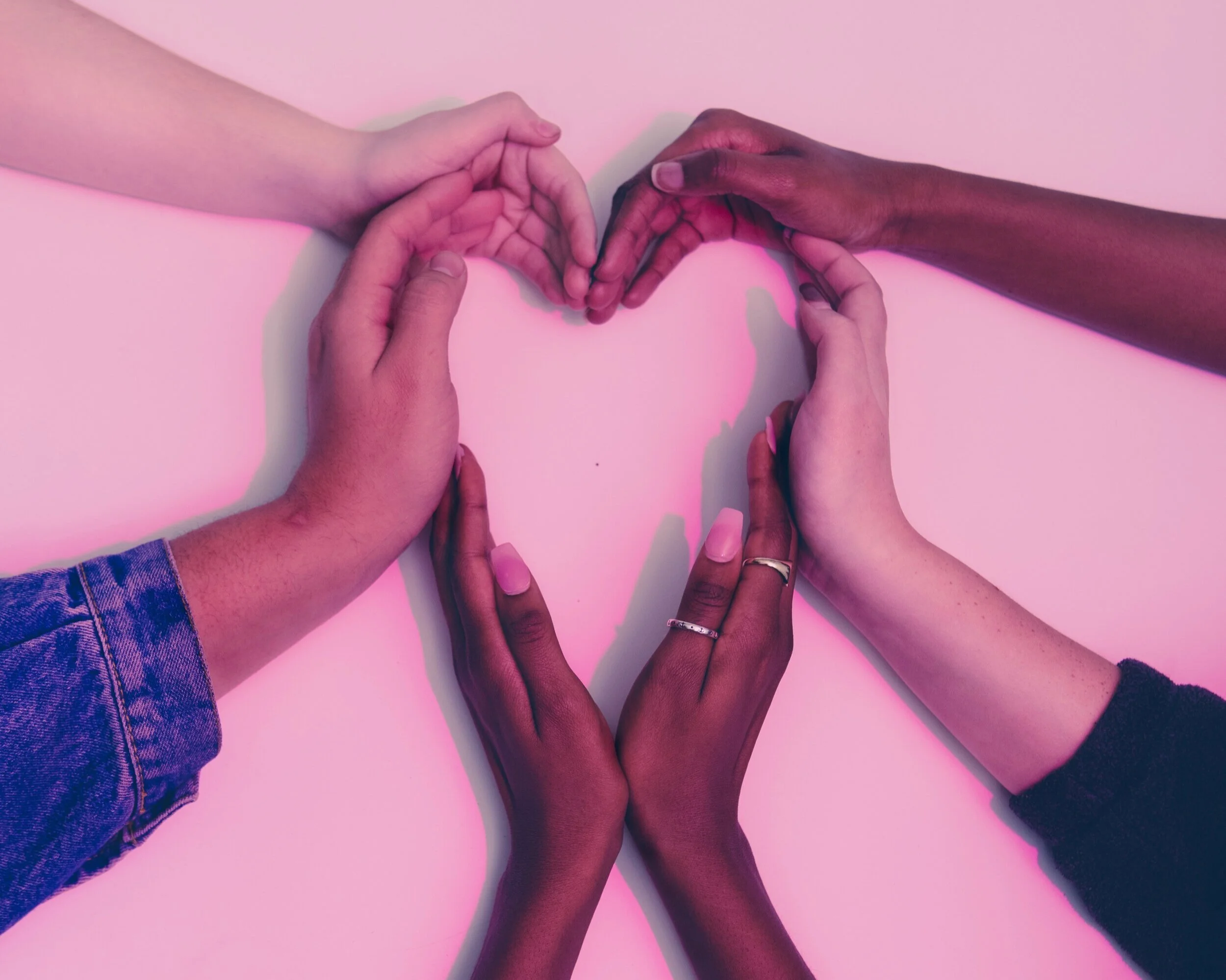
In October, Thrive did a lot of talking to raise awareness about domestic violence and intimate partner violence. For the remainder of the year, we want to walk that talk by supporting the Cincinnati YWCA’s Domestic Violence Services programs, which provide shelter, transitional housing, and other support services to women and children affected by DV.
To this end, we’re hosting a holiday supplies drive, collecting items that the YWCA DV Services staff needs for their clients. If you’re able to help during this season of giving, please bring NEW, PACKAGED items to any Thrive class in November and December, or make arrangements with us for porch pickup.
Each item you donate is worth one raffle ticket for prize drawings, including a Thrive t-shirt, gift card for free training in 2021, and more!
Here’s what the YWCA DV Services staff has asked for:
Gift Cards: All program staff report their clients benefit from gift cards (Example, Kroger, Target, Walmart, UDF, Marathon, Visa in $15, 20, 25, 50 denominations)
Full size lotion
body wash
Shampoo
Conditioner
Hair oil/grease
Combs
Brushes
Bonnets/shower caps.
Paper towels
Soap, (Dove bar preferred)
Adult socks
Underwear (sizes 5-6-7)
Skillets and pots
Dishes would be good
Twin-size blankets
Toasters
Coffee pots
Winter shoes or boots (assorted sizes)
Disinfectant wipes and cleaning sprays
Sponges
Brooms
Mops
Toilet cleaner
Safety gates
Outlet safety covers
Cabinet locks and door locks
Toys, all ages of children (specifically requested were rattles, blocks and so forth, but there are children all the way through teenage years whose parents are in our programs)
Transitional Living Program “kits” containing the following: twin sheet set, twin blanket, pillow, towel, wash cloth.
If you have any questions, please reach out to us, and thanks in advance for helping us to support survivors in our community.
Big love,
Lindsey & Lauren
Photo by ATC Comm Photo from Pexels
A Letter to the Men Who Didn’t Abuse Me
To the men who are constant reminders that abusers are just that, abusers. There are good men in this world.
I could write this entire blog post to the men who have done critical damage to me in my life. But I will not let them have that power.
First to my husband, who has literally seen me at my worst. I have been my ugliest self to you and you love through that filth. Quoting my vows, because they are just as relevant now as they were then: "Every day you make it a priority to build me up. Every day you changed my mind that a man can be faithful and love without conditions. You have never made me question if I was worthy of your love. You support my dreams and passions no matter how many times I've changed my mind."
To my father-in-law: You once tried to tell me how to fix my car and I snapped at you. At the time, I didn't understand that's what being a dad is about; you weren't trying to make me feel small or incapable. All the dad advice. You are the “world's greatest dad,” like the mug says. Hearing stories from your son about you two working on cars and building things together just proves my point. You talk about your kids like they are the greatest things this world produced. The 8-year-old little girl inside of me longs for that. You are such a fantastic example of what a father is supposed to be, an example I so desperately needed. You are a man of few words, but they are all the right ones.
To my coach: I walked into the gym last week and you came over to show me something you were so proud of. You had painted your ring fingernail purple to support Domestic Violence Awareness Month. And you said, "I don't support choking women unless they slap-bump first."**
No one told you to do that. You are a tatted BJJ coach with a mohawk, who spends most of his time putting ripped bros in high-low chokes. But you painted your nail. To support women—no, to support me. I pay you to teach me jiu-jitsu; all you have to do is show up and teach. But you don't. You go above and beyond. You make sure to reiterate every day that I am strong and capable of using my body to defend myself. Like a brother, you notice the bad days—without any ulterior motives, you notice. Every time I step on that mat, you respect me like a human and you make me believe that I matter.
You all owe me nothing, yet you continue to pick up the pieces.
Thank you for being beautiful beams of light in such a dark world.
—Lindsey Ross
**A slap-bump is how training partners in Brazilian Jiu-Jitsu communicate to each other that they are ready to spar. It’s a sign of mutual respect and consent.
Photo by Juan Pablo Serrano Arenas from Pexels

Staying Safe in the Campus Red Zone

Although working to prevent violence is a year-round job, there are three points during the year where our work feels especially urgent: April (Sexual Assault Awareness Month), October (Domestic Violence Awareness Month), and the start of a new university school year.
In other words, right now.
The number of sexual assaults on campus spike during the period between the first day of school and Thanksgiving break—so significantly, in fact, that they’ve been labeled “the red zone.” According to RAINN, more than 50% of assaults happen during this period of time, mostly between midnight and 6 a.m. on weekends. And though we’ve all been warned about “stranger danger,” the truth is that 90% of sexual assaults are perpetrated by someone the victim knows. As we tell the young women who come to our Campus Ready classes, it’s of course important to be situationally aware as you’re walking alone across campus or through your neighborhood, but the most dangerous situations are typically dates and parties. (Alcohol lowers the inhibitions of predators, makes it more difficult for women to read warning signs and physically defend themselves, and is a convenient vehicle for blackout drugs like rohypnol.)
While this data can feel very scary, young women aren’t helpless. There’s much we can do to move through campus more confidently and safely.
1. Knowing is half the battle. Just educating yourself and having frank conversations—with your teens if you’re a parent, and your friends if you’re a college student—increases campus safety. We can’t defend against things we don’t know about, but simple awareness can help students recognize warning signs faster and make more confident decisions about when to leave a party or end a date.
2. Identify your campus resources. The day you step foot on a new campus, make time to visit the campus safety and security office. Ask the staff what safety measures the university has put in place, for example:
a. Are there campus shuttles? Where are the stops and what are the days and hours of operation?
b. Is there a school safety app you can download? Are there emergency phones or call boxes? Can the staff provide a map of their locations on campus?
c. Is there a counseling center on campus? Does it have a 24-hour helpline?
d. Do they employ an assault advocate?
3. Team up with your friends and roommates. When I was a freshman at Xavier University, my roommate, Stacey, and I had a dry erase board on our dorm room door. Whenever we left, we’d pen a little note for each other, like “studying in the library” or “soccer practice” or “lifeguard shift.” I think it started out as just a friendly courtesy thing, but looking back, that was an excellent safety practice for those first few months living in a new place. If there would have been an emergency or one of us would have gone MIA for an unusual amount of time, our roommate would have at least known where to start looking. Other simple things you can do include letting your roommate/close friends know when you have a date and when you think you’ll be home. (You can always text them if your plans change.) And keep an eye on each other at parties. We’re not saying you have to be all up in each other’s business all the time or become the mother hen of your friend squad—this is all about just having each other’s backs.
We believe young women should be just as free as young men to go anywhere and do anything they please—on campus and off. We want you to live big and enjoy every moment of this exciting and transformative time in your life. And we think that two of the best ways for young women to feel confident and safe enough to do that is to educate ourselves about the realities and risks we face and to support each other.
We’re smart. We’re strong. We’ve got this.
—Lauren
Interested in a Campus Ready class but don’t see one on our workshop schedule right now? Drop us a line.
Photo by Andrea Piacquadio from Pexels